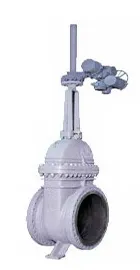
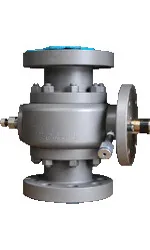
Duplex Steel Gate valve

Our organization is a leading company that manufactures and supplies range of industrial valves made from various steel materials such as forged steel, alloy steel especially duplex steel. Duplex steel Valves are valves which are used for control the accumulation of fluids.
Duplex steel is a material which structure is made from mixture of two different steel like austenitic and ferritic. It has specific property of intergranular corrosion and pitting resistance.
Duplex steel valve is used in oil and gas industry equipment, offshore platforms, power industry, high pressure ro-plants, seawater piping, fire-fighting systems, and injection and ballast water systems.

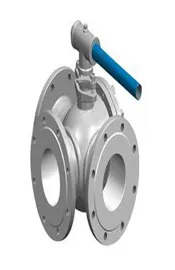
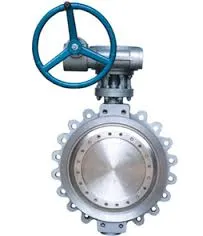
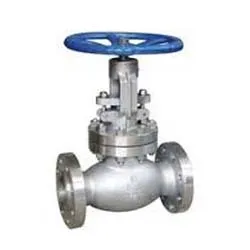
We supplies variety of superior quality, separation features and paramount sealing duplex steel valves including  Ball Valves, Butterfly Valves, Gate Valves, Non Return Valves and Globe Valves.

Duplex Steel Ball Valves are valves that controlling flow using ball mechanism. It is high grade intergranular corrosion free valves that used in sea water application or desalination facility, mining industries where tight shut off and shut on is needed under high pressure and temperature.
Duplex Steel Gate Valve is specially designed by us for assures minimum turbulence, erosion and resistance to flow. Its controls flow of fluid in pipeline in both directions by controlling movement of gate and it is suitable for applications where full on and full shut off is required.
Duplex Steel Globe Valves are linear motion valve which is use for controlling and regulating flow by using rotating disc. These globe valves are adapted to controlling or throttling flow conditions at cryogenic temperatures.
Duplex Steel Non Return Valves are highly required where prevention of back flow in necessary. It is suitable for all type of fluids and aggressive environments.
Duplex Steel Butterfly Valves are corrosion resist safety and quick closing/opening valves. It is used for controlling and regulating flow by metal circular disc or vane and also provides resistance again reverse flow.

Salient features :

  • Highly Resistant to corrosion
  • Rust proof
  • Lighter in weight
  • Compact designing
  • Accurately dimensioned
  • High performance
  • Fire-proof
  • Resistant to inorganic acids and chlorides
  • Anti-static design

Applications :

  • Oil & gas industry equipments
  • Power plants
  • fire-fighting  equipments
  • water purification plants
  • injection & ballast water arrangements

Frequently Asked Questions

1. What is a Diaphragm Valve? + A Diaphragm Valve is an industrial valve designed to control, regulate, or isolate the flow of liquids, gases, slurries, and corrosive media. It uses a flexible diaphragm that moves against a valve seat to provide reliable flow shut-off and control.
2. Where are Diaphragm Valves commonly used? + Diaphragm Valves are commonly used in chemical processing, pharmaceutical, food and beverage, water treatment, wastewater treatment, mining, pulp and paper, and other industries where hygienic operation and resistance to corrosive or abrasive media are important.
3. What are the main advantages of Diaphragm Valves? + Diaphragm Valves provide excellent sealing, reliable shut-off, low maintenance, and good resistance to corrosive and contaminated fluids. The diaphragm also separates the operating mechanism from the process media, helping protect internal components from corrosion and contamination.
4. Can Diaphragm Valves handle corrosive and abrasive media? + Yes, Diaphragm Valves can handle many corrosive, abrasive, and contaminated media when the diaphragm and valve body materials are properly selected. Different diaphragm materials are available to suit specific chemical, temperature, and process conditions.
5. How does a Diaphragm Valve operate? + A Diaphragm Valve operates by moving a flexible diaphragm toward or away from the valve seat. When the diaphragm is pressed against the seat, the flow is stopped. When it is lifted, the passage opens and allows the process media to flow through the valve.
6. What maintenance is required for a Diaphragm Valve? + Regular maintenance includes inspecting the diaphragm for wear or damage, checking the valve body and sealing areas, removing deposits, and verifying proper opening and closing operation. Periodic diaphragm replacement may be required depending on the application and operating conditions.
Request A Quote